
Seton Hall Welcomes Law Enforcement Expert Darrin Porcher for Discussion on Crisis Communication and Public Trust
Thursday, October 29, 2026
 When a crisis puts law enforcement in the spotlight, how agencies communicate can
shape public perception and trust. That challenge was at the center of a recent discussion
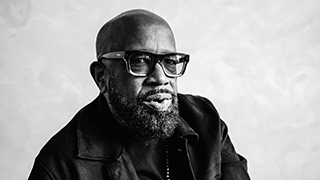
at Seton Hall University, featuring Darrin Porcher, Ed.D., a retired New York Police
Department (NYPD) lieutenant and nationally recognized law enforcement expert and
media analyst.
Titled "When the World Is Watching: A Media Strategy for the Law Enforcement Voice," the October 8 event was hosted by the College of Human Development, Culture, and Media in connection with the University's M.A. in Law Enforcement Executive Leadership (LEEL) program. Held in person at the Gateway Center in Newark and virtually, the event drew more than 50 attendees, including students, alumni and law enforcement practitioners.
Navigating Law Enforcement in the Public Eye
With two decades of experience in the NYPD and an extensive background in national media, Porcher brought a unique perspective to the intersection of law enforcement, public accountability and crisis communication. Throughout his career, he held several leadership positions, including serving as counterterrorism coordinator for the New York City Transit system and working in citywide community affairs. Following his retirement from the NYPD, Porcher became a prominent media analyst, offering commentary on criminal justice issues, police accountability and high-profile cases for major news outlets, including CNN, MSNBC, Fox News and Court TV.
Porcher's discussion addressed one of the most challenging situations law enforcement leaders encounter: communicating with the public while the facts surrounding an incident are still developing. Attendees explored how leaders can balance transparency with the need to avoid speculation, protect ongoing investigations and maintain public confidence.
The conversation highlighted the importance of thoughtful communication during high-profile incidents, particularly as social media, continuous news coverage and heightened public scrutiny increasingly shape public perceptions of policing.
Engaging Students in Real-World Leadership Challenges
 A highlight of the event was the active participation of students, who helped shape
the discussion through thoughtful questions and engagement with Porcher.
Two LEEL students opened the program with questions submitted in advance, setting the stage for a broader conversation involving students, practitioners and alumni. Their questions addressed the practical challenges of communicating during uncertain and rapidly evolving situations, including how law enforcement leaders can remain transparent without compromising investigative integrity.
Students from Seton Hall's School of Diplomacy and International Relations also participated through a cross-curricular partnership, bringing additional perspectives to the discussion and underscoring the relevance of effective crisis communication across professional disciplines.
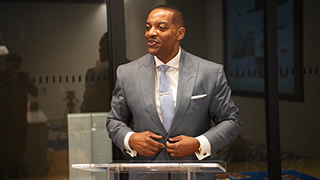
Kishon C. Hickman, Sr., Ed.D., director of the LEEL program, emphasized the value of connecting students with experienced professionals who have navigated these challenges firsthand.
What our Law Enforcement Executive Leadership students heard from Porcher is exactly what this program is built to teach: how to lead with clarity when the public is watching. Our students are working professionals who will face those moments themselves and to hear them answered by someone who has lived both sides of the camera is the kind of connection that makes our program matter.
Preparing the Next Generation of Law Enforcement Leaders
 The event reflected Seton Hall's commitment to preparing law enforcement professionals
to navigate the complex demands of contemporary leadership.
Organized in connection with HRTD 6646: Crisis Communications and Media Relations,
the discussion complemented the LEEL program's emphasis on developing practical leadership
competencies in organizational management, communication, policy and crisis response.
By connecting academic learning with the professional experiences of leaders such as Porcher, the program provides students with opportunities to examine real-world challenges and consider how effective communication contributes to organizational accountability, public confidence and stronger community relationships.
The October 8 event reinforced the importance of clear, credible and transparent communication as an essential component of law enforcement leadership. Through opportunities for meaningful dialogue with experienced practitioners, Seton Hall continues to bridge academic learning and professional practice, equipping current and future leaders with the skills needed to navigate complex challenges in their communities.
Categories: Community Engagement