
Powering New Jersey’s Future: Seton Hall Receives $194,700 NJEDA Clean Energy Fellowship Award
Thursday, September 10, 2026
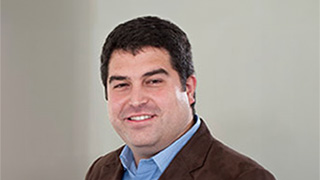
Fellowship Director Jose L. Lopez, Ph.D., Professor of Physics and Director of the Office of Grants and Research Services (OGRS)
Seton Hall University has been awarded $194,700 by the New Jersey Economic Development Authority (NJEDA) through its Clean Energy Fellowship Program. The two-year initiative will fund student fellows in independent clean energy research under the guidance of faculty mentors.
The award builds on Seton Hall’s participation in a statewide effort that treats clean energy as both an environmental and economic priority. NJEDA launched the Wind Institute Fellowship Program in 2022 and expanded it to private research universities in 2023, when Seton Hall joined. The program was reshaped into the Clean Energy Fellowship Program to support student research across a wider range of clean energy fields.
Student fellows’ projects may contribute to a master’s thesis, doctoral dissertation or other sustained scholarly work. They will participate in cohort meetings, guest lectures and site visits and present their findings to academic, industry and community stakeholders at the annual Clean Energy Research Symposium. Alongside their research, these statewide experiences will help students build professional networks and explore opportunities in New Jersey’s clean energy workforce.
“Energy is one of the most critical issues in modern society,” said fellowship director Jose L. Lopez, Ph.D., professor of physics and director of the Office of Grants and Research Services (OGRS). “We depend on it every day, from turning on the lights to taking a bus or driving. How do we power the country? How do we power our local community? How do we power our lives?”
The questions are immediate, as well as intergenerational. For him, answering them requires looking beyond current demand to consider what will remain for the people living here a century or more from now. “We have to think of alternative approaches,” Lopez noted, including ways to obtain “the energy we need to live and thrive and prosper” while preserving the conditions that make life possible.
The Clean Energy Fellowship gives students diverse ways to approach the challenge, including research in solar, wind, geothermal and hydropower. Across these fields, Lopez emphasized the importance of producing usable energy efficiently while reducing pollution and waste.
Students can also investigate the policies that guide energy development. A wind farm, Lopez explained, involves relationships among developers, public agencies, utilities and the towns through which its electricity will travel. Decisions about where to build infrastructure, how to protect local resources and how to respond to residents’ concerns bring public policy and community knowledge directly into the work of energy development. “We need people who have understanding and expertise not only in science and engineering, but in policy, social work, community building and urban development,” Lopez said.
The fellowship’s broader public purpose also resonates with Seton Hall’s mission. “Social justice also includes environmental justice,” Lopez added. He emphasized the need for infrastructure that protects the environment and the people living where energy is extracted or produced, while ensuring that “everybody is benefiting from it.”
A year of funded research, Lopez noted, gives students hoping to contribute to New Jersey and beyond a practical starting point.

Kaitlyn C. Spitzer, MPA, Grants Specialist of OGRS and 2023-24 NJEDA Wind Institute Fellow
For Kaitlyn C. Spitzer, MPA, a grants specialist in OGRS and a 2023-24 NJEDA Wind Institute Fellow, that starting point led into a field she had never expected to enter. While completing her Master of Public Administration at Seton Hall, Spitzer conducted the project Wind Powering the Garden State: Stakeholder Insights for NJ’s Offshore Wind Industry.
Spitzer approached offshore wind through a public administration question: “What is it that is impacting people and their opinions?” Through a survey of New Jersey residents, she examined how environmental concerns, expectations for Jersey Shore tourism, political views and public narratives—including reports about marine wildlife—shaped support for or opposition to offshore wind. She also compared public responses to wind and solar energy and examined research on communities’ reactions to wind farms elsewhere, broadening the study beyond a simple division between supporters and opponents.
“It’s not like you have to be a science person,” she said, encouraging students from a wide range of majors to explore where their skills might lead.
Faculty mentorship from Michael Taylor, Ph.D., associate professor of political science, helped Spitzer develop her research paper and conduct the public opinion survey. Monthly fellowship meetings connected her with fellows from different disciplines and institutions across the state, introducing possibilities beyond her curriculum. “It changes your perspective on what you’re able to do with a degree,” Spitzer added.
The relationships she developed through the fellowship also helped lead her into research-related work, with each new experience opening another area of learning. “It led to something that maybe wouldn’t have been there before the fellowship,” she said.
For Lopez, paths like Spitzer’s speak to the broader relationship between Seton Hall and the state it serves. “The most exciting thing for me is that Seton Hall is a major part of New Jersey.” He described the fellowship as part of preparing students for future roles as leaders, scientists and citizens in the state.
Lopez also sees New Jersey’s investment in clean energy as an investment in the health and well-being of its residents. The question is how energy production can enable people to “prosper and live well here in New Jersey.” He connects this work to Seton Hall’s public purpose and its role within the state that chartered it. The fellowship gives students a way to engage with the purpose through research on how energy is produced, understood and governed. The work begins with individual research projects, each engaging a broader question: how to meet the needs of people living today while also caring for the world we leave for future generations.
Categories: Nation and World, Research