

Annual Lewinson Lecture
Every year the Lewinson Center invites a major scholar to deliver the Annual Lewinson Lecture on a theme relevant to the Center’s mission and purpose.
2026–2027 Lewinson Lecture Theme: Civil Rights, Human Rights, and Economic Security in a Time of War
Date: Wednesday, November 11
Time: 5:15PM
Location: Bethany Hall, Room C; reception to follow in Bethany Hall, Room B
Registration, though not required, is appreciated.
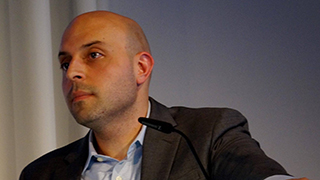
Professor Sa’ed Atshan, Ph.D.
The Lewinson Center for the Study of Labor, Inequality, and Social Justice is honored to host Prof. Sa’ed Atshan, Ph.D. for the 2026–2027 Lewinson Lecture on the theme of human rights in a time of war. Atshan is a Professor of Peace and Conflict Studies and Anthropology at Swarthmore College whose research focuses on Health and Humanitarianism, Contemporary Palestinian Society and Politics, Global LGBTQ Social Movements and Christian Minorities in the Middle East. He is a Visiting Scholar at the School of Anthropology and Museum Ethnography at the University of Oxford for the 2026-2027 academic year.
His work is at the intersection of sociocultural anthropology; critical development studies; peace and conflict studies; medical anthropology; anthropology of policy; humanitarianism; gender and sexuality; social movements; the Middle East and North Africa; modern Germany; religious studies; Quaker studies; and film and visual studies. You may learn more about his scholarship here.
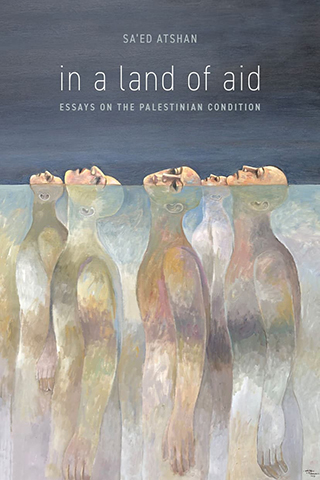
Professor Sa'ed Atshan's book "In a Land of Aid: Essays on the Palestinian Condition"
“In a Land of Aid: Essays on the Palestinian Condition”
Sa’ed Atshan will discuss his forthcoming book, In a Land of Aid: Essays on the Palestinian Condition (Stanford University Press, 2026).
For decades, the international community, Israeli occupation, and Palestinian elites have engineered the humanitarianization of the Palestinian Territories—reframing the question of Palestine as a humanitarian concern rather than a political one. Today, the West Bank and Gaza Strip have become the world’s humanitarian laboratory, and Palestinians are among the largest recipients per capita of humanitarian aid. This aid provides Palestinians with essential tools for survival and resilience, yet it has also entrenched Israeli colonial control.
Atshan traces how humanitarianism has become the dominant lens through which Palestinian life is now governed. Drawing on over a decade of research, Atshan introduces readers to foreign aid workers, policymakers, scholars, and Palestinians as they navigate political constraints on the ground. Together, these encounters reveal an aid apparatus riddled with contradiction: simultaneously sustaining life, narrowing political imagination, and generating new forms of inequality and contestation.
Atshan amplifies Palestinian voices that express growing ambivalence toward both the prevailing humanitarian discourse and the inherited resistance narratives that no longer fully capture their embodied realities. Atshan finds that to understand contemporary global humanitarianism, we must reckon with its impact in Palestine; and to understand contemporary Palestinian society, we must confront the role of aid. Ultimately, this book insists that the most powerful response to the paradoxically dehumanizing effects of aid lies in our affirmation of shared humanity.
For inquiries, please email the Director (Axel Takacs): [email protected]