
Practicum Instructor Training Highlights Ethics and Anti-Racist Social Work Practice
Monday, September 28, 2026
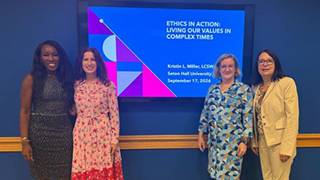
Left to right: La'Tesha Sampson, Kristin L. Miller, Mary Landriau and Dawn Apgar
Social workers are called to uphold the dignity and worth of every person while recognizing the social, political and economic systems that influence their clients’ lives. To support professionals in meeting that responsibility, Seton Hall University recently hosted a continuing education practicum instructor training led by Kristin Miller, a Licensed Clinical Social Worker (LCSW), who is in full-time private practice, as well as a part-time faculty member in the Department of Social Work and Public Administration.
The training, held on September 17, focused on social work ethics, professional values, self-awareness and anti-racist practice. Miller encouraged practicum instructors to reflect on how their identities, personal experiences and individual values influence their interactions with students and clients. She also emphasized the important role instructors play in helping future social workers develop ethical and culturally responsive approaches to practice.
Throughout the presentation, Miller discussed the importance of understanding clients within the broader context of their lives. Social workers must consider how family systems, communities, educational institutions, public policies and economic conditions shape individual experiences. Race, culture, gender, sexual orientation, socioeconomic status and other aspects of identity can also affect how people experience services and interact with professionals.
The training emphasized that social workers must do more than recognize discrimination and systemic inequities. Drawing from anti-racist principles, Miller explained that meaningful social work practice requires intentional action. Practitioners must be willing to recognize bias, challenge harmful assumptions and advocate for equitable access to services and resources. This approach allows practitioners to understand clients more fully, recognize their strengths and connect them with resources that support their ability to advocate for themselves and their families.
By providing professional development and continuing education opportunities, Seton Hall University supports practicum instructors in their roles as educators and mentors. Practicum is considered the signature pedagogy in social work with juniors and seniors, as well as graduate students in community-based practicum placements. Practicum instructors help students connect classroom knowledge with direct practice while modeling cultural humility, active listening, ethical decision-making and a commitment to social justice.
Categories: Education