
NSF Fellows Deliver Real World Policy Recommendations and Research to Senior American and Japanese Defense Officials
Friday, April 10, 2026
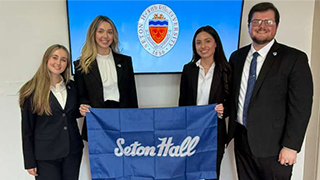
National Security Fellows at the Asian Studies Detachment of the 500th Military Intelligence Brigade
Students from Seton Hall University’s 2025-26 National Security Fellowship recently returned from a landmark trip across the Pacific to Japan, offering the fellows a unique and rewarding opportunity to meet, engage with and present to high-ranking Japanese and American defense officials, expanding their understanding of modern international security threats and providing an opportunity to apply their education outside of the classroom.
The trip was attended by the fellowship’s second year students: Mary Burke, Ella Carver, Ana-Sofia Torres and Colin Smith. By directly engaging with a key United States ally, the students have expanded the reach of the program, further elevating the program from one that supports the US government to one that can aid partners across the globe. Throughout the week in Tokyo, the fellows presented their research on the increasing role of unmanned and autonomous systems in maritime security and the security risks posed by the spread of AI and modern technology, as well as adversary cyber groups, in a conflict in the Indo-Pacific. They delivered briefings to US Indo-Pacific Command (INDOPACOM) leadership, US Army Japan G2 staff and the Asian Studies Detachment of the 500th Military Intelligence Brigade, allowing the students to engage with both nation-specific and transnational security issues. The fellows were often met with specific questions and robust feedback, highlighting the quality of the research and the effectiveness of the delivery.
In addition to these presentations, the fellows participated in educational dialogues, site visits, and closed-door briefings with bilateral counterparts, defense specialists and research personnel. These engagements provided the fellows with valuable insights into the defense and intelligence analysis processes through the lenses of alliance structures, emerging technology and great power competition in an increasingly contentious geopolitical landscape. By extension, the experience allowed the fellows to observe the on-the-ground effects of US foreign policy and the interconnectedness of academia and national security policy.
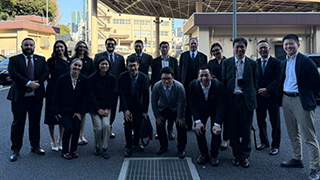
National Security Fellows with Japanese Bilateral Counterparts
One of the fellows, Colin Smith, reflecting on the trip said, “this fellowship provides a truly unique experience to take our skills outside the classroom and apply them to tangible issues of international relations and security. The months of work and practice strengthened my ability to conduct high-level research and communicate with career professionals, along with exposing me to rewarding career paths to pursue once I graduate.”
Mr. Mirghahari, NSF’s mentoring fellow, said “My National Security Fellows stepped into rooms with senior U.S. and Japanese defense leaders to deliver real-world policy recommendations and research on some of today’s most complex national security challenges. This is where academic rigor meets operational reality. They didn’t just present research, they demonstrated the ability to think critically, communicate clearly, adapt in a high-stakes, multinational environment and serve as subject matter experts. Experiences like this don’t just prepare students for careers in national security; they shape them into contributors to it. Just as importantly, they were trusted by the Department of Defense to represent the United States in its bilateral relationship with Japanese military leadership.”
The trip highlighted the core mission of the National Security Fellowship, to provide students with an opportunity to bridge the divide between academia and “real-world” national security and defense practices. By engaging with a high-stakes and dynamic environment that connects US and allied personnel, the program equips the next generation of scholars and practitioners with advanced research experience, analytical rigor, diplomatic fluency and the high-level operational awareness necessary to confront today’s most complex security challenges, both domestic and international. The global landscape will continue to shift and evolve, but the National Security Fellowship’s model of experiential learning and high-ranking engagement will continue to prepare Seton Hall’s students to face an increasingly complex and nuanced international system.
Categories: Nation and World