
Diplomacy Dean Joins UN Foundation Learning Trip With U.S. Congress
Tuesday, March 24, 2026
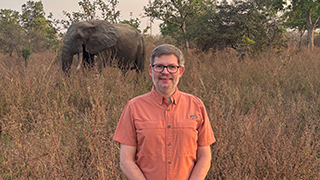
Dean Smith at the Mole National Park in Ghana
In January, the Dean of the School of Diplomacy and International Relations, Courtney Smith, Ph.D., joined the United Nations Foundation learning trip delegation to Ghana and Togo alongside representatives of the United States Congress. Over six days, the delegation engaged directly with key development challenges in both countries and examined how the UN is supporting efforts to address issues such as violent extremism, food insecurity, disease propagation, migration flows and deforestation.
As a partner of the UN Foundation, Seton Hall University’s School of Diplomacy brought an academic voice to this important space for dialogue on international issues, connecting policy discussions with field experience and real-world practice.
Aligned with the UN Foundation’s mission to raise awareness of global challenges and promote dialogue toward a shared future, this initiative brings American policymakers into direct contact with United Nations operations, strengthening their understanding of how US investments in the UN system contribute to development, security and peace worldwide.
Over the past 15 years, the program has engaged more than 200 congressional staff members in visits to over 40 countries. This time, headed by Congresswoman Young Kim, representative of California’s 40th District; the delegation included Congresswoman Madeleine Dean, representative of Pennsylvania’s Fourth District; Congresswoman Lauren Underwood, representative of Illinois’ 14th District; Peter Yeo, senior vice president of the UN Foundation; and Mariana Becerra, director of North American Advocacy at the Eleanor Crook Foundation.
Upon arriving at Mole National Park, Ghana’s largest protected area, the delegation learned about partnerships led by the United Nations Development Programme (UNDP) and the Food and Agriculture Organization of the United Nations (FAO) with local institutions to finance biodiversity conservation and strengthen disease prevention efforts. The visit also included a stop at Tamale Central Health, where participants explored the government’s collaboration with the Eleanor Crook Foundation to expand health services and address severe wasting among more than 61,600 children.
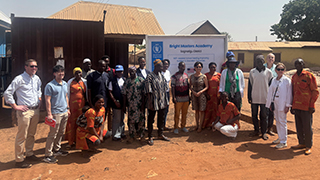
Members of the delegation visiting the Bright Masters Academy and the Ghana School Feeding Programme
At Bright Masters Academy, a local elementary school, the delegation was introduced to the Ghana School Feeding Programme, implemented in partnership with the World Food Programme (WFP) and learned about its measurable impact on student enrollment, attendance and retention. The schedule also featured the Edesia Warehouse, highlighting its large-scale humanitarian food logistics operations supporting more than 60 countries in collaboration with UN agencies and the U.S. State Department.
The visit in Ghana included meetings with officials from several of the 19 UN agencies in the country, coordinated by Zia Chowdhury, the UN Resident Coordinator in Ghana. The group also had the opportunity to discuss U.S.–Ghana relations and the UN’s collaboration to address critical issues with Rolf Olson, Chargé d’Affaires of the U.S. Embassy in Accra and other members of his team. These conversations provided broader insight into the ongoing cooperation between international partners and national institutions.
In Togo, the delegation was introduced to the WFP Regional Logistics Corridor and Warehouse at the Port of Lomé, a major entry point for food assistance and emergency supplies destined for crisis-affected countries across the region. The group also visited UniPod Togo, an innovation and technology hub at the University of Lomé, developed in partnership with UNDP, which showcases initiatives that support entrepreneurship and sustainable development.
With a focus on food security, participants toured an aquaculture research center implemented in partnership with FAO and learned about a coastal resilience project that supports local producers through sustainable practices. In the health sector, the delegation visited a UNICEF Community Outreach Clinic and met with representatives at UNFPA’s One Stop Center, a pioneering facility providing comprehensive support to survivors of gender-based violence.
The program also included high-level meetings with several government and international representatives, including Barrie Freeman, Deputy Special Representative of the UN Secretary-General for West Africa and the Sahel (UNOWAS); Coumba D. Sow, UN Resident Coordinator in Togo; and Richard C. Michaels, Chargé d’Affairs of the U.S. Embassy in Togo.
According to Dean Smith, “This trip is one of the UN Foundation's signature initiatives and aims to increase American support for the UN. This trip was significant for the variety of thematic projects it included, focusing on social and economic issues, humanitarian assistance, conservation, economic development, health and nutrition and education. Through on-site visits and meetings with the local communities, including refugees, young women in vocational training and survivors of gender-based violence, the delegation had an immersive experience with the reality of UN operations in the field.” He concluded by emphasizing the School of Diplomacy’s pride in being part of the United Nations community and in bringing these firsthand experiences back to share with the School’s faculty and students.
Categories: Education, Health and Medicine, Nation and World