
Philosophy Professor Vicente Medina Shares Perspective on the Cuban Diaspora in Chicago Tribune
Thursday, August 27, 2026
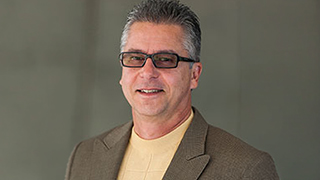 Vicente Medina, Ph.D., professor of philosophy in the College of Arts and Sciences, recently published an opinion piece in the Chicago Tribune exploring the historical and cultural significance of July 26th for the Cuban community
and its displacement.
Vicente Medina, Ph.D., professor of philosophy in the College of Arts and Sciences, recently published an opinion piece in the Chicago Tribune exploring the historical and cultural significance of July 26th for the Cuban community
and its displacement.
In his essay, "What does the 26th of July Movement mean now for Cubans?", Medina offers thoughtful commentary on how this pivotal date — which marks Fidel Castro’s 1953 attack on the Moncada Barracks and the launch of the 26th of July Movement — is reflected upon today. Bringing a human and historical perspective to the topic, he examines the complex resonance of the date among Cubans on the island and throughout the world who continue to grapple with its legacy.
“For dissenting Cubans, the 26th of July means living under an authoritarian system whose leaders have broken their promises for a better and fairer society,” Medina wrote in the Tribune. “But for the first time in over 67 years, they have reason for a glimpse of hope as the end of the one-party system is becoming a real possibility.”
When asked what inspired him to write the commentary, Medina drew a parallel to Frederick Douglass’s 1852 address, "What to the Slave is the Fourth of July?", highlighting the fundamental hypocrisy of Cuba’s single-party state. While acknowledging there is no direct equivalence to American slavery, he reflected on how the moral analogy holds: the Cuban government systematically violates the basic human rights and dignity of its citizens, despite protections for free expression and peaceful assembly in its own constitution.
Pointing to the nationwide protests on July 11, 2021 — where peaceful demonstrators calling for "Libertad" were met with violent state suppression and mass incarcerations — Medina illustrates the divide between legal rhetoric and daily reality in Cuba.
"Any political system that claims to respect in theory the dignity of people but in practice systematically violates such dignity is not worth respecting," Medina noted in a follow-up interview, emphasizing that citizens carry no moral obligation to obey tyrannical regimes that deny fundamental liberties.
A University faculty member for more than three decades, Medina has authored works on political theory, political violence and Cuban intellectual history. While Medina's primary scholarly focus centers on social and political philosophy, his commentary in the Chicago Tribune is an example of how Seton Hall faculty bring scholarly expertise to complex global issues in the public sphere.
Medina’s commentary echoes beyond the philosophy department, holding special significance for the University's Joseph A. Unanue Latino Institute, which is dedicated to advancing Latino culture, mentorship, and student leadership on campus. For Executive Director Lori Tarke, DHSc, whose parents fled Havana in 1967, the piece connected both the Institute's mission and a deeply personal family legacy.
"As an Institute that celebrates Latino impact in America, and as the daughter of Cuban exiles, we carry the Cuban experience in our programming and students,” said Tarke. “For more than seven decades, my family has carried the hope that one day, Cuba would be free. And today, for the first time in my lifetime, I feel that perhaps we are closer to realizing the Cuba Libre my family prayed for."
To read the full commentary, visit the Chicago Tribune.
Categories: Arts and Culture, Nation and World