
From Vision to Community: P-PAC’s First Year of Pre-Law Advising
Friday, October 23, 2026
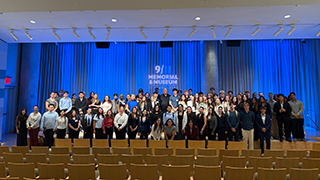
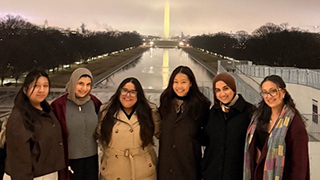 Last spring, twelve Seton Hall undergraduates traveled to Washington, D.C., where
they visited the Supreme Court, attended a congressional hearing and met with senior
attorneys in the executive branch. The experience offered students a firsthand look
at the legal profession and reflected the experiential learning opportunities emerging
through the Pre-Professional Advising Center’s (P-PAC) pre-law advising services.
In response to growing student interest in law school, P-PAC expanded its established advising model to include pre-law advising, offering individualized guidance, LSAT preparation resources, professional connections and experiential learning opportunities. In its first year, students earned admission to law schools including Seton Hall, Rutgers, George Washington, Cardozo, St. John’s, Villanova, New York Law School and Pace, with many also receiving merit scholarships.
Expanding the P-PAC Model
As the inaugural director of Seton Hall University’s Pre-Professional Advising Center,
Chantal Vergara established a comprehensive advising model guided by the Explore,
Prepare, Apply framework. Building on P-PAC’s established pre-med and pre-health advising
services and growing student interest in law school, Vergara’s mission was to expand
the Center to offer pre-law advising, extending the same successful comprehensive,
developmental approach to students pursuing law. This expansion brought the breadth
of P-PAC’s pre-health support to pre-law students, with individualized advising, preparation
resources, workshops, events, peer support and opportunities to engage with professionals
in the field.
“When we launched these additional services for our pre law students, we wanted to create a clear pathway for students interested in the law. From their initial questions about the legal profession through the law school application process, our goal has been to provide proactive guidance, opportunities, programming, events, and resources that support students’ personal and professional development, help remove barriers to success, and equip them with the information they need to make informed decisions as they prepare for law school,” Vergara said.
As part of this expansion, Vergara expanded her team and hired Madelyn Ferrans, an attorney, as P-PAC’s full-time pre-law advisor and added pre-law peer advisors to support students. Ferrans provides individualized advising throughout students’ undergraduate years, including personal statement review, law school selection and application strategy. She also coordinates workshops, events and programming that connect students with legal professionals and introduce them to different aspects of the legal profession.
Across both pre-health and pre-law advising, P-PAC’s approach emphasizes developmental advising, recognizing that preparing for professional school involves more than meeting admissions requirements. Through ongoing guidance, students explore their interests, reflect on their strengths and areas for growth and develop the personal and professional skills needed to make informed decisions about their futures.
Breaking Down Barriers to Law School
Recognizing the financial and academic challenges of LSAT preparation, P-PAC introduced
workshops, weekly section-based practice sessions, biweekly full-length diagnostic
exams, peer tutoring, an expanding LSAT library and discounted preparation resources.
The Center also launched its inaugural LSAT PowerScore Cohort. More than 20 students received preparation books and online study resources, along with monthly meetings focused on accountability and peer support.
Ayden Hepp described the impact of the cohort on his preparation:
Being a part of the LSAT PowerScore cohort completely shaped my LSAT journey. I was given access to PowerScore's ‘LSAT Bibles’ along with their online catalog of thousands of practice questions completely for free. Our cohort was given a structured study plan that I used as a foundation when forming my own study regiment. Most importantly this cohort gave me access to a network of professionals and peers who all played a significant role in helping me stay on track and excited throughout the entire study timeline.
Opening Doors to the Legal Profession
“The strongest pre-law programs aren't built around applications - they're built around
relationships,” said Ferrans. “Students need mentors, experiences, and professional
connections that help them grow long before they submit an application.”
Throughout the year, P-PAC connected students with attorneys, judges, nonprofit leaders, government officials, corporate counsel, alumni and law school admissions professionals. Programming included Supreme Court Preview and Review sessions, discussions of constitutional law, conversations about the impact of the #MeToo movement and events exploring public interest law.
The inaugural Pre-Law Expo brought representatives from more than ten law schools to campus, giving students opportunities to ask questions and learn about admissions directly from law school representatives.
Learning by Doing
Experiential learning was another defining feature of the year. P-PAC partnered with
the Seton Hall Undergraduate Law Review to launch the Undergraduate Legal Scholars Symposium. Over six months, students researched
legal issues alongside faculty, administrators and student mentors before presenting
their work at a university-wide symposium.
Students also participated in Policy Pulse, an interdisciplinary initiative focused on developing policy proposals addressing public health issues related to vaccines. The winning team participated in a budget hearing, collaborated with students from Princeton and Rutgers, analyzed the proposed budget, prepared written testimony with guidance from New Jersey Citizen Action and presented recommendations to New Jersey legislators.
These experiences allowed students to examine how law and public policy intersect while developing research, communication and critical-thinking skills.
Building a Community
P-PAC also worked with Seton Hall’s pre-law student organizations to create the Pre-Law
Leadership Alliance, bringing student leaders together to encourage collaboration,
shared programming and a stronger sense of community.
Sukaina Jacquet, president of the Minority Pre-Law Society, reflected on the partnership:
Working with P-PAC this year has been one of the most rewarding parts of serving as President of the Minority Pre-Law Society. Our partnership gave students opportunities to engage with the legal profession in meaningful ways. Together, we created spaces where students could learn from attorneys and professionals, build connections across organizations, and recognize that being a future lawyer is about more than preparing for law school; it’s also about serving your community and using your voice to make a difference.
Ferrans emphasized the value of students learning alongside one another:
While the law school application process is inherently competitive, we believe students are most successful when they learn alongside one another. By sharing experiences, encouraging each other, and celebrating milestones together, they're building relationships that will support them throughout law school and their legal careers.
Looking Ahead
Vergara and Ferrans also attended and presented at regional and national pre law advising
conferences, bringing new perspectives to P-PAC’s advising and programming. As the
Center continues to develop its pre-law advising services, priorities include expanding
experiential learning, building partnerships with law schools and legal professionals,
increasing access to admissions resources and creating additional opportunities for
students to explore the legal profession.
Vergara said:
I’m incredibly proud of what we’ve accomplished in our first year of pre-law advising!! Maddie, our Pre-Law Advisor, and our dedicated PPAC peer advisors have brought so much initiative and creativity to this work. Their energy, dedication, and commitment to our students have been instrumental in expanding and fostering a supportive pre-professional community where students feel connected, empowered, and prepared to pursue their goals. Looking ahead, we’re excited to continue expanding opportunities and developing a strong pre-professional community that supports the next generation of medical and legal professionals.
Categories: Law