
Seton Hall’s Continued R2 Status Reflects Research Strength
Thursday, April 16, 2026
 On March 12, 2026, the newly designed Carnegie Classification seals arrived for Seton
Hall. The University continues to hold Carnegie’s R2 designation — “Research 2: High
Spending and Doctorate Production” — within the Carnegie research classification framework,
while also continuing to be recognized as an “Opportunity Colleges and Universities”
institution, Higher Access, Higher Earnings under the Student Access and Earnings
Classification. Together, they capture what is essential about Seton Hall: a place
steadily deepening its research capacity while remaining equally committed to access,
mobility and student success.
On March 12, 2026, the newly designed Carnegie Classification seals arrived for Seton
Hall. The University continues to hold Carnegie’s R2 designation — “Research 2: High
Spending and Doctorate Production” — within the Carnegie research classification framework,
while also continuing to be recognized as an “Opportunity Colleges and Universities”
institution, Higher Access, Higher Earnings under the Student Access and Earnings
Classification. Together, they capture what is essential about Seton Hall: a place
steadily deepening its research capacity while remaining equally committed to access,
mobility and student success.
In the broader landscape of American higher education, R2 signals a university with high research activity and doctoral production, and at its best, one where discovery and teaching strengthen one another. The designation often reflects an institution’s ability to compete more effectively for grants, recruit accomplished faculty, expand programs responsive to community needs and deepen opportunity for a broader range of students, while still preserving close mentorship and a student-centered academic experience.
The strongest R2 stories, however, are never about chasing a label at the expense of identity; they are about expanding research without losing sight of teaching, access and mission. For Seton Hall, this larger meaning resonates powerfully. As a Catholic university, its research mission is inseparable from its deep commitment to serve the human person and the common good.
Far more than a branding device, the newly official Carnegie seals now give Seton Hall a clear, unified way to communicate that identity across program and college pages, enrollment communications, rankings and reputation messaging, and news storytelling throughout the University. In a single image, they express what faculty, students, staff and administrators have been building over time: a research enterprise shaped by rigor, collaboration, visibility and mission.
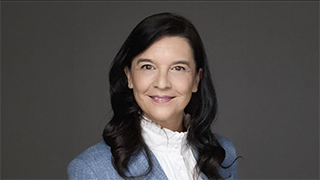
John Buschman, M.A., D.L.S., dean of University Libraries and associate provost for Research and Innovation, has been central to this progress. “Sustaining R2 alongside the Opportunity designation is meaningful; it affirms both the strength of the scholarship happening at Seton Hall and the kind of institution we are called to be,” Buschman said. “It tells us that we are building serious research capacity while staying true to our commitment to students. It also places Seton Hall in conversation with peer institutions whose academic seriousness we deeply respect.”
Over the years, the Office of Grants and Research Services (OGRS) has consistently emphasized and translated into action stronger support for faculty seeking both external and internal funding, along with sustained investment in proposal development. “When people feel genuinely supported, stronger scholarship becomes possible,” Buschman said.
The commitment is evident in the continued strengthening of the University’s research enterprise. A central priority has been to widen the pool of funded researchers, particularly by helping newer faculty enter the grants landscape and supporting their development over the long term. Even in a federal funding climate where award amounts may be lower, continued growth in the number of applications has been encouraged as an investment in Seton Hall’s future. In support of this goal, OGRS has expanded its services and outreach, working closely with researchers to build stronger submissions and guide them through the process with greater clarity and confidence.
Greater alignment across infrastructure, communication, and faculty support has been achieved between OGRS and the University Libraries. With the University Libraries as a strong partner, OGRS has strengthened its web presence, enhanced its annual reporting on grants and research and advanced the implementation of Cayuse, a system for managing research proposals and grants. By streamlining administrative processes, the system allows more time, energy and effort to be directed toward supporting faculty rather than tracking paperwork. This work has been accompanied by a stronger focus on training and compliance, helping to ensure that grants are administered responsibly and in accordance with required standards.
Beyond these efforts, OGRS has also worked closely with colleagues in the Office of General Accounting and the Office of Corporate and Foundation Relations to keep the grants process as consistent and seamless as possible. The result is more than operational efficiency; it is a research environment that is thoughtfully coordinated, attentive to the needs of faculty and staff and genuinely supportive of the people behind the work.
The upward trajectory is evident in the numbers as well. Since Buschman began serving in the Associate Provost for Research and Innovation role in January 2021, the number of grant applications at Seton Hall has tripled. He credits the support of Interim Provost Erik Lillquist, J.D. and former Provost Katia Passerini as essential to this progress, emphasizing that research growth at Seton Hall has been a shared institutional effort grounded in collective intention, sustained effort and a deeply held belief in the value of scholarship.
A culture of research storytelling has also been actively cultivated. Visibility goes beyond celebrating a designation for its symbolic value alone; it is about honoring the scholarship behind it and helping others come to see its reach. “There is always excellent work happening across Seton Hall, but too often it remains buried within academia,” Buschman said. “We need to let each other, our communities and the broader public know the quality, quantity and depth of the scholarship accomplished here.” He also emphasized the importance of “putting real effort into publicizing grants and research across campus and beyond,” ensuring that such work is not overlooked.
Alongside OGRS’ ongoing day-to-day dissemination efforts, this commitment is also put into practice through the University Libraries. Here, Buschman and his team train and guide OGRS Graduate Assistants in producing news stories and research features that bring faculty scholarship and the people behind it into view, ensuring that both they and their work, efforts and contributions are seen, recognized and valued as they deserve.
This vision also finds a natural companion in the new Carnegie seals, which now offer Seton Hall a unifying language for communicating its research identity and student-centered promise. The seal provides a shared language, yet the deeper story is always about people, ideas and impact.
Seen together, Seton Hall’s continued R2 designation tells the story of a University that continually invests in faculty and students, expands opportunity, strengthens scholarship and remains rooted in mission. It speaks to an institution that understands research excellence and generous access are never separate achievements but mutually reinforcing. In the story these new seals now help to tell, Seton Hall stands out as a community where discovery is guided by purpose, opportunity is expanded by intention, leadership is shaped by care and vision, with academic strength placed in service of a broader mission.
Categories: Research