

Inside the Core: Plato's Allegory of the Cave
Thursday, September 10, 2026
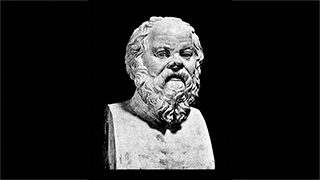
Bust of Socrates
Inside the Core, in Core I, students are reading the works of Plato, including the “Allegory of the Cave” from his Republic. This famous Socratic allegory tells of people living in a cave, chained and able to see only shadows reflected on a wall. The shadows come from a fire behind them, with objects being carried by others, and the chained individuals mistake these shadows for reality.
In my classes, whenever I teach this story, I show a clip from the 1999 film The Matrix, depicting a world where artificial intelligence has developed and taken control and has created an illusory world, which consists of a false depiction of reality, nothing like the destroyed planet actually existing (in the film’s futuristic world of the twenty-first century). The parallel between the illusions projected in the digital world of The Matrix are similar to the shadows mistaken for reality in Plato’s Allegory.
Some key questions arise from both stories, and these questions also apply to artificial intelligence in our own world, particularly as it is explored in Pope Leo XIV’s encyclical Magnifica Humanitas. Here are some of them:
- What truth(s) are being hidden or twisted by the appearances projected as reality?
- Is it better to live in an illusory but safe world or face the challenge of possibly unpleasant truths?
- Who are the ones depicting the reality projected either by the shadows on the cave wall or the digital projections of AI in The Matrix and our own world?
In Plato’s Allegory, the shadows keep the cave-dwellers busy and unwilling for the most part to attempt to leave the cave and live in the world of the sun (allegorically, the world of philosophical truth). In The Matrix, the digital false reality hides the horrors of the world that has been destroyed through a war between humanity and artificially intelligent creatures. The false depiction keeps the humans docile and essentially slaves. In Pope Leo’s encyclical misuse of AI can keep us from knowing the truth in all its moral, ethical and spiritual complexity. Social justice issues can be glossed over and distorted. Financial profit as an ultimate motive, desired by the creators of various AI platforms, is hidden under the falsely objective perspective of AI responses to questions. And the moral and ethical reality of war can be dealt with from the distance of AI, if it is allowed to determine military decisions without the human ethical capacity of a soul.
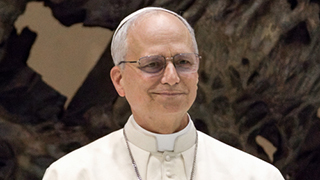
Pope Leo XIV
In light of the losses that occur from the illusions (in any of the depictions), clearly Plato, Pope Leo and even Neo the main character in The Matrix, believe it is better to face the challenges of reality rather than live in a false rendering of it through illusion. Pope Leo does not say that all AI is bad or used to deceive or manipulate. But he warns that it can be so used, and much of whether or not this manipulation occurs depends on who it is who is creating and determining the nature of the particular brand of artificial intelligence.
Who are the projectors of the shadows in Plato’s cave? We do not know from the story, but Plato’s use of it as a story told by Socrates regarding the importance of discovering truth, even though those in the cave might respond with anger toward those challenging their reality, suggests that those projecting the shadows serve the status quo, the world, in fact, that executed Socrates for challenging its own assumptions. In The Matrix, as mentioned, the creators of the false reality are artificially intelligent beings that have taken over our world and are keeping actual humans as slaves.
Pope Leo warns that the creators of much of artificial intelligence are or at least can be profit-motivated with little or no concern for social justice, equality or ethics. He says,
In many cases within the digital context, control over platforms, infrastructure, data and computing power does not rest with States, but with major economic and technological actors. These entities effectively set the conditions for access, determine the rules of visibility and shape the very possibilities for participation. When such power is concentrated in the hands of a few, it tends to become opaque and evade public oversight, increasing the risk of distorted forms of development that give rise to new dependencies, exclusions, manipulations and inequalities.
In the light of this situation, artificial intelligence, while not evil in itself and certainly capable of being used for good, can – if left unmanaged and unchecked – serve to exacerbate the already systemic inequality existing among peoples in our troubled world. The shadows, so to speak, of AI-created reality can lead to decisions regarding employment, credit worthiness, mortgages, etc., being perpetuated in ways that reinforce already existing injustice and inequality. Even more chilling is its use to determine military decisions, where lives can be considered without a human and ethical sense of their great human dignity. (Chapter III, section 95).
However, as Plato’s Allegory depicts, it is possible to ascend from the world of shadows out of the cave into the world of light (the truth). The Matrix also offers the choice of the blue pill or the red pill, only one of which involves facing the reality underlying the false digital world in which most of humanity is living. Pope Leo’s encyclical also offers hope, which he connects with the beautiful Magnificat, Mary’s prayer of praise after the Annunciation when she visits her also miraculously pregnant cousin Elizabeth (Luke 1:46–55):
In the Core, ancient texts like Plato’s “Allegory of the Cave” and Luke’s Gospel converge with our own experience and the wisdom and warnings in Pope Leo XIV’s encyclical, Magnifica Humanitas.
Categories: Faith and Service