

Dawn Apgar Appointed by Governor to New Jersey Board of Social Work Examiners
Wednesday, November 18, 2026
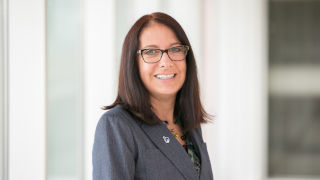
Dawn Apgar, Ph.D.
Dawn Apgar, Ph.D., chair of the Department of Social Work and Public Administration and associate professor, has been appointed by New Jersey Governor Mikie Sherrill to the New Jersey Board of Social Work Examiners. This governing body plays an integral role in shaping the standards, integrity and future of social work practice in New Jersey.
For Apgar, the appointment continues her distinguished career in public service and provides an opportunity to contribute her extensive expertise to the regulatory oversight of a profession dedicated to protecting vulnerable populations, strengthening communities and advancing human well-being.
Her history with this board dates to her original appointment by former New Jersey Governor Jon Corzine in January 2009. Apgar served as both member and chair, leaving in 2016 when she resigned her position as deputy commissioner of the Department of Human Services to join the faculty at Seton Hall University.
Established through the Social Workers’ Licensing Act of 1991, the New Jersey Board of Social Work Examiners serves as a cornerstone of professional accountability within the state. Charged with protecting the public, the board oversees the qualifications, educational requirements, training and professional experience necessary for individuals seeking certification or licensure in social work.
The board regulates more than 30,000 social workers with one of three professional credentials: Certified Social Worker (CSW), Licensed Social Worker (LSW) and Licensed Clinical Social Worker (LCSW). Together, these designations establish a framework for levels of professional preparation, scope of practice and legal responsibility.
Through its oversight, the board helps ensure that the individuals providing these essential services possess not only the necessary professional credentials but also the competence and accountability required to uphold public trust.
Apgar has been recognized for her contributions to social work education, scholarship and professional licensure preparation. Her research, publications and educational resources have prepared aspiring social workers seeking professional credentials and navigating the transition from academic study to professional practice.
Apgar states, “This appointment reflects my sustained focus on helping the next generation of social work professionals. Social workers respond to increasingly complex societal challenges, making rigorous professional oversight paramount.” Apgar cites the implementation of the Social Work Licensure Compact in 2027 as a major impetus for her wanting to be a member of the board. The Social Work Licensure Compact is an agreement among participating states, including New Jersey, that allows eligible licensed social workers to obtain a multistate license, making it possible to practice in other member states without applying for a separate license in each state. It is designed to improve license portability, facilitate telehealth across state lines, increase access to services and support continuity of care when clients relocate or travel. New Jersey enacted compact legislation in May 2025, but multistate licenses have not yet been issued nationally as infrastructure is still being created to realize practitioner licensure portability.
“At a time of significant change in the social work profession, strong professional regulation is essential to protecting the public, maintaining professional standards, and ensuring a competent workforce,” states Apgar. “Social work education extends beyond the classroom. Serving on the Board allows me to bring Seton Hall's commitment to education, leadership, and service into the regulatory and policy decisions that shape professional social work practice throughout New Jersey.”
Social workers have always carried an ethical responsibility that extends beyond individual practice to shaping the systems, policies and institutions that affect individuals, families and communities. Advancing social justice and protecting the public are not simply professional obligations; they are central to the ethical calling of the social work profession.
Categories: Community Engagement