
Three Latina/o Studies Students Selected to Present Research at the MACLAS 2026 Digital Conference
Monday, November 9, 2026
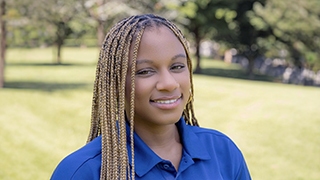
Tajayda Roomes, a sophomore majoring in Biology on the PA track and a peer advisor for the Center for Academic Success.
Three undergraduate students from Seton Hall University have been selected to present original research at the Middle Atlantic Council of Latin American Studies (MACLAS) 2026 Interdisciplinary Digital Conference, a regional scholarly gathering that brings together students, faculty and researchers from across the United States and beyond.
The conference, themed “Pedagogies of Possibility: Teaching, Learning and Decolonizing Knowledge in Turbulent Times,” will be held virtually on November 12-13, 2026. As MACLAS's second interdisciplinary digital conference, the event welcomes undergraduate students, graduate students and scholars from all academic fields to share research related to Latin America, the Caribbean and Latino/a/e communities. The conference is free and open to the public.
The three students, all mentored by Adjunct Professor Jennifer A. Vilchez, Ph.D., who teaches Introduction to Latina/o Studies, were accepted through a competitive proposal process and will present research projects examining issues of social justice, colonialism, political history and Latino experiences in the Americas.
On Thursday, November 12, at 12:30 p.m., Tajayda Roomes, a sophomore majoring in Biology on the P.A. track and a peer advisor for the Center for Academic Success, will present “Uncovering the Prison Construct: The Impact of the Mass Incarceration Era on Latino/a Communities.” This paper argues that the higher incarceration rates among Latina/os in the U.S. has been impacted by racial hierarchies and systemic capitalism. Roomes will discuss how the disproportionately higher rate of Latina/o individuals incarcerated is often overshadowed by the white and black division in the U.S. prison system.

Gabriela Roa-Mariot, a sophomore majoring in Biology on the PA track and minoring in Spanish and Latin American and Latino/a Studies.
On Friday, November 13, at 9 a.m., Gabriela Roa-Mariot, a sophomore majoring in Biology on the PA track and minoring in Spanish and Latin American and Latino/a Studies, will present “Falling Dominoes: The Cascading Interconnected Histories of the Dominican Republic.” Her presentation explores the complex historical forces that have shaped the Dominican Republic and its diaspora, examining how political, economic and social events have influenced one another across time by situating the domino as a capacious metaphor for critical inquiry.
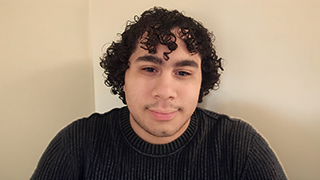
Jeremy Perez, a sophomore majoring in philosophy who takes part in Sustainability Action Club and SHU-TV.
Later that afternoon, at 3 p.m., Jeremy Perez, a sophomore majoring in philosophy who takes part in Sustainability Action Club and SHU-TV, will present “Paradise Privatized: The Esencia Project and the Struggle for Puerto Rican Autonomy.” Focusing on economic development, land use and self-determination in Puerto Rico, Perez’s research examines the controversial Esencia Project and its implications for local communities. His presentation considers broader questions about neoliberal capitalism, autonomy and the preservation of the environment.
Participation in MACLAS offers undergraduate students an opportunity to engage in scholarly dialogue with researchers from a wide range of disciplines and institutions. Conference presentations are also eligible for the organization's newly established Jack Child Award, which recognizes outstanding papers and presentations delivered through MACLAS digital events. At least two undergraduate and two graduate student presenters will be selected for the honor and invited to present their work at the organization's annual spring conference to be held at nearby Kean University.
The acceptance of all three students' projects reflects the strength of undergraduate research at Seton Hall in field of Latina/o Studies and demonstrates students' commitment to examining pressing issues affecting Latino communities. Their participation showcases the value of undergraduate research and highlights the important contributions students can make to contemporary academic conversations.
Categories: Arts and Culture, Research