Court Rulings That Could Reshape Health Agency Fines
Conflicting appeals court decisions leave federal enforcement uncertain, Seton Hall Law professor Anjali Deshmukh and her co-author write in the New England Journal of Medicine.

Conflicting appeals court decisions leave federal enforcement uncertain, Seton Hall Law professor Anjali Deshmukh and her co-author write in the New England Journal of Medicine.
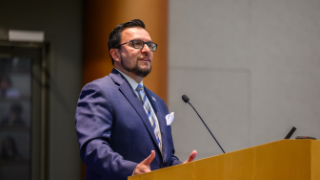
New Jersey Supreme Court Justice Michael Noriega ’02 reflects on belonging, the challenges of being a first-generation law student and the responsibility to open doors for those who follow.
Disabled veterans often receive more generous support than civilians with similar conditions, but race, gender and discharge status shape who qualifies for help.
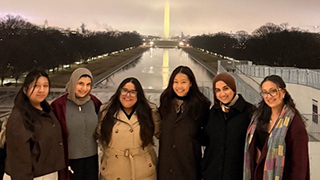
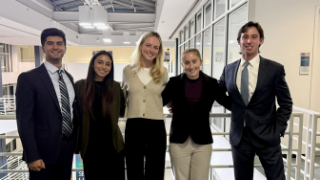
Seton Hall Law Leadership Fellows spent five weeks teaching constitutional law to high schoolers in Union County as part of their capstone project.
In just one year, P-PAC has expanded its services to include pre-law advising at Seton Hall, opening doors to LSAT preparation, legal experiences, professional mentorship and a supportive community.
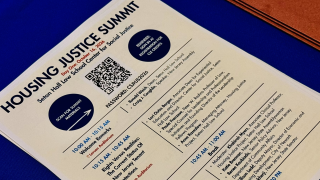
Speakers at the Housing Justice Summit said New Jersey’s tenant protections are undermined by rent-deposit requirements, screening databases and uneven enforcement.
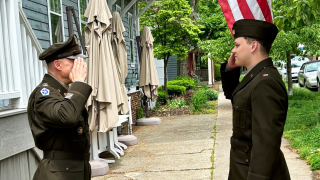
Army first lieutenant and Seton Hall Law student Trevor Johnson draws on his family’s legacy of service as he prepares for a career in military law.
Healthcare leaders and legal experts explore emerging risks, artificial intelligence and strategies for building effective compliance cultures.
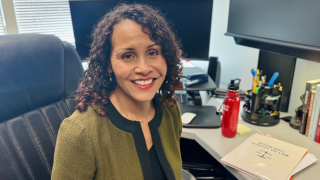
Raised by Dominican immigrant parents, Professor Solangel Maldonado built a career shaped by mentors who opened doors. Now, she is opening them for others.
Seton Hall University’s Center for Social Justice has expanded its clinical legal programs, establishing three new clinics with the generous support of the New Jersey State Bar Foundation.
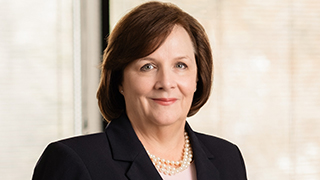
The Seton Hall Law alumna and 2026 St. Thomas More Medal honoree has built a career in litigation and service while keeping family and community at the center.
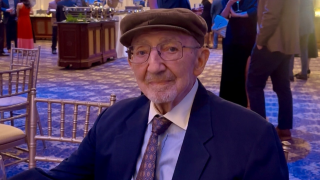
From Bombay to Seton Hall Law, 98-year-old Professor Emeritus Robert Diab, this year’s St. Thomas More Medal honoree, overcame decades of obstacles to build a distinguished teaching career.
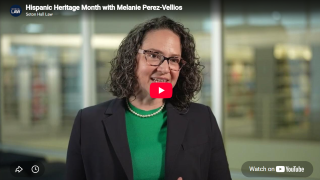
Assistant Professor of Legal Practice and LEO Program Director Melanie Perez-Vellios shares her journey to becoming a lawyer and law professor.
The 1963 Supreme Court decision transformed the right to counsel—and offers law students a lasting lesson about the responsibility of lawyers.
Professor Jenny-Brooke Condon explores Plyler v. Doe and its enduring lessons about equal protection, constitutional interpretation and the rights of noncitizens.
Professor Thomas Healy explains why the landmark 1964 Supreme Court decision remains central to protections for speech about public officials.
Contact the Office of Media Relations
519 South Orange Ave.,
South Orange, NJ, 07079
( 973) 378-9816
More Information