
Seton Hall Physician Assistant Graduates Bring Primary Care to Patients in Need Through the National Health Service Corps
Tuesday, November 3, 2026
 Since 1972, the National Health Service Corps (NHSC) Scholarship Program has provided
financial support to students in the health professions. For graduates of Seton Hall University's M.S. in Physician Assistant (PA) program, it has also opened the door to careers dedicated to improving healthcare access
for underserved populations.
The NHSC Scholarship Program supports students pursuing primary care careers in exchange for service in Health Professional Shortage Areas (HPSAs) after graduation. HPSAs are federally designated areas that do not have enough healthcare providers. Seton Hall PA alumni have embraced the program’s mission as NHSC scholars, using their education and training to provide high-quality care to patients who often face significant barriers to accessing healthcare.
Meeting Patients Where They Are
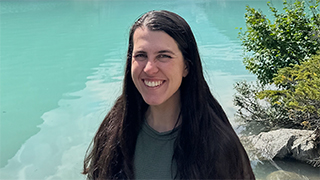 For Liz Brambilla, M.S. ’23, PA-C, service through NHSC fit her longstanding commitment
to primary care and communities in need. Today, she practices family medicine with
a federally qualified health center (FQHC) in Washington state, serving predominantly
homeless and low-income patients aboard clinic buses that travel throughout the region.
"I especially love getting to work on our mobile medical units to give care to people that may not have received care otherwise," she said. "I really enjoy meeting people where they are and giving quality care on the spot."
Brambilla credits the program’s thorough training and range of clinical experiences with preparing her for her role.
"The focus on primary care, clinical skills and extra rotations prepared me well to enter the field of primary care at an FQHC," she said.
Giving Back Through Primary Care
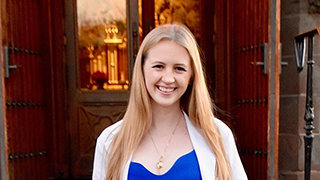 For Madison Debbie, M.S. ’24, PA-C, the decision to pursue NHSC service was deeply
personal. Now practicing at Zufall Health, an FQHC in Dover, New Jersey, she provides
primary care to a diverse patient population facing challenges related to insurance
coverage, finances, transportation, language barriers and access to specialty care.
She also treats patients with opioid and alcohol use disorders through medication-assisted
treatment programs.
Debbie's commitment to serving vulnerable patients began years before PA school during her work as an EMT. Her own experiences growing up with limited financial resources further strengthened her desire to help patients facing similar challenges.
"Working with underserved communities felt, in many ways, like giving back to the kind of community I came from," she said.
One of the most unexpected outcomes of her career has been learning Spanish while caring for a large Spanish-speaking patient population.
"There are patients I once needed significant assistance communicating with whom I can now speak with directly," Debbie said. "Being able to build that connection in their own language has reinforced for me that becoming a better provider isn't only about expanding my medical knowledge."
Beyond Financial Support
While both alumni acknowledge the tremendous financial benefits of the NHSC Scholarship
Program, they emphasize that the experience extends far beyond receiving tuition assistance.
For Brambilla, primary care offers the opportunity to build long-term relationships with her patients and see improvements in their health over time.
For Debbie, the service commitment led her to a practice setting and patient population that have shaped her professional identity.
“NHSC paid for my education, but the service commitment has also shaped the kind of PA I have become," she said.
Advice for Future PAs
Both graduates encourage PA students, particularly those committed to primary care
and health equity, to consider the NHSC Scholarship Program. They say working with
patients who face barriers to care builds clinical skills, supports professional growth
and leads to rewarding connections with the people they treat.
“The experiences of these graduates highlight both Seton Hall’s Catholic mission and the mission of the PA profession: taking care of the underserved and marginalized,” said Christopher Hanifin, Ed.D., PA-C, chair of the M.S. in Physician Assistant program. “As these alumni continue working where providers are most needed, they show the difference physician assistants can make in patients’ lives.”
Categories: Health and Medicine, Research