
Kata Holos Lunch Explores Faith, Vocation and Wholeness with Tara Hart
Monday, November 23, 2026
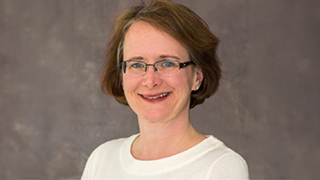
Tara Hart
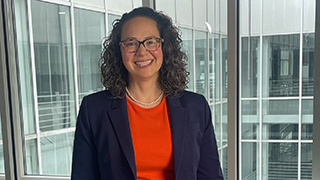
Faculty and staff explored the relationship between faith, work and personal well-being at the Center for Catholic Studies’ November 9 Kata Holos Lunch. In conversation with Tara Hart, Seton Hall University’s assistant vice president for strategy and administration, participants considered how caring for others can go hand in hand with caring for oneself.
Patrick Manning, Ph.D., the Center’s director, moderated the gathering in the Faculty Lounge of the Bishop Dougherty University Center. He introduced the lunch series as an opportunity for colleagues to reflect together on wholeness in their professional and personal lives.
Hart traced her interest in higher education to her years as a resident assistant and student government class president. Relationships with faculty and staff mentors, along with the experience of working alongside peers, showed her how a University community could shape a person’s life even when the results were not immediately visible. She sought a career with that same sense of purpose.
She began her Seton Hall career more than two decades ago in the Department of Housing and Residence Life. Recalling the Boland Hall fire and the September 11 attacks, she described how those losses deepened her awareness of life’s fragility and reaffirmed her commitment to her work. “My life is gifted to me by God,” Hart said.
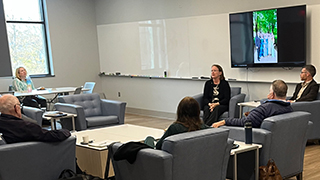
Tara Hart lunch discussion event
A former colleague helped her extend that reflection beyond her professional life. Checking in after those losses, the colleague asked how Hart’s life was developing outside work and doctoral studies. The question stayed with her and led her to pray about what God might be calling her to do in her personal life.
Mass, the sacraments and prayer continue to sustain Hart amid the demands of work and family. As a parent, she is learning to bring her worries about her children to prayer before stepping in to resolve them. “In trying to solve something, I often make a second problem,” she said.
The discussion then moved from family life to the relationships colleagues build at work. One participant described mentoring younger faculty members who were stretched thin while feeling some of the same pressures. Having encouraged colleagues to slow down, the participant asked what more a mentor could offer when those demands persisted.
Hart responded by considering what mentors and supervisors model through their own choices. Watching a family member care for others while overlooking her own health had prompted her to reconsider how she was caring for herself. At work, she recognized a similar tension: she encouraged her team to use vacation time but had not been following that advice herself.
She encouraged mentors and supervisors to practice the habits they recommend and give their teams room to do the same. Hart had experienced that care herself: most of her Seton Hall supervisors, she said, had recognized her as a whole person and treated her with care.
Reflecting on the gathering, Manning said, “At Seton Hall, we profess to be 'a home for the mind, the heart, and the spirit' and strive to recognize and honor the full humanity of all members of our community. That commitment is nowhere more evident than in gatherings like this recent Kata Holos lunch and in the mutually supportive dialogue inspired by Tara's reflections.”
Hart’s story offered a personal expression of the wholeness at the heart of the Kata Holos series: a life in which faith, vocation and relationships inform and sustain one another. Her reflections invited colleagues to consider how care for the whole person can shape both their own lives and the University community they build together.
Categories: Community Engagement, Faith and Service