
Toth-Lonergan Lecture Explores How to Find a Path in a Disorienting Age
Tuesday, April 21, 2026
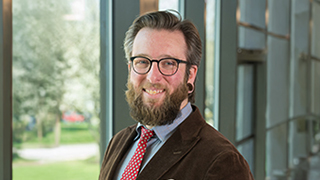
Johnathan Heaps
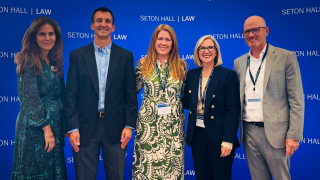
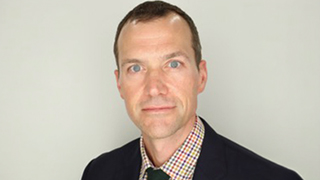
Faculty, students and religious gathered at Seton Hall University for this year’s Toth-Lonergan Lecture, where Jonathan Heaps, Ph.D., director of the Bernard J. Lonergan Institute, offered a thoughtful and timely reflection on Bernard Lonergan’s enduring relevance for a world marked by uncertainty, rapid change and moral disorientation. Introduced by Patrick R. Manning, Ph.D., associate professor of Pastoral Theology and Director of the Center for Catholic Studies, the lecture invited attendees to consider not only the challenges of contemporary life, but also the deeper human and spiritual resources needed to respond to them.
Titled "Finding a Path in the Dark: Lonergan’s Guidance for Getting Oriented in a Disorienting World," the lecture began with a simple but searching premise: many people today feel unmoored. Drawing on Lonergan’s 1968 reflections on belief, Heaps noted that “in times of great social and cultural change,” people can be left “at a loss,” unsure what to trust, what to believe and how to move forward. Rather than responding with easy answers or abstractions, he invited the audience to begin where Lonergan begins: with the person. “Getting oriented,” Heaps said, “begins with you.”
From there, Heaps unfolded one of the lecture’s central themes: the dignity and responsibility of the human person. In one of the afternoon’s most memorable lines, he told attendees, “It is a good thing that you are and are yourself.” The claim was not sentimental. It served as a philosophical and spiritual point of departure. To affirm oneself, in Lonergan’s sense, is to recognize one’s life as both gift and task — something precious, unrepeatable and entrusted to one’s care. That self-affirmation, Heaps suggested, carries with it a summons to live not passively, but deliberately.
This led to a searching meditation on Lonergan’s figure of “the drifter” — the person who moves through life by absorbing the assumptions and choices of others rather than becoming oneself with freedom and purpose. Heaps did not present that diagnosis to condemn, but to challenge. The deeper question, he suggested, is whether one will be oneself by accident or “on purpose.” Even amid uncertainty, Lonergan’s thought offers a way forward: “We have to believe and trust, to risk and dare.”
A major thread throughout the lecture was the role of questioning in the search for truth. Heaps emphasized that questions are not obstacles to understanding but the beginning of it. Reflecting on his own students, he noted that when they ask, “How do you know?” they have often already taken the essential first step. “They have asked the question,” he said, “and they have already done the most essential thing.” Later, in one of the lecture’s clearest formulations, he added, “You don’t have to ask every question. You only need to ask your questions.” Wisdom, then, is not instant certainty, but the patient work of attending to the questions that arise from one’s own life and following them toward what is true and worthwhile.
The Q&A extended these themes into the life of the University. Discussion turned to student formation, pedagogy and the importance of embodied learning. Heaps stressed that students do not encounter difficult questions as disembodied minds alone. “They’re going to have feelings,” he observed, underscoring the need for attentiveness to both thought and affect in the classroom. The exchange also highlighted the importance of in-person, relational education and the kind of intellectual formation rooted not only in ideas, but also in presence, attentiveness and care.
By the close of the afternoon, the Toth-Lonergan Lecture had offered more than an interpretation of a major Catholic thinker. It offered a compelling vision of intellectual life itself: rigorous, humane, self-reflective and open to transcendence. In a moment when many feel pressed by confusion and fragmentation, Heaps’ lecture reminded those in attendance that the search for truth remains inseparable from the formation of character, the cultivation of wisdom and the courage to become fully oneself. The lecture will be available on the Center for Catholic Studies YouTube channel, making its reflections accessible beyond those able to attend in person.
Categories: Campus Life, Education, Faith and Service