Minor in Archaeology Studies
Co-sponsored by the Department of Religious Studies, Classical Studies and Sociology/Anthropology. Participating faculty bring a broad range of academic experience from disciplines of arts and humanities, behavioral and exact sciences.
The Minor in Archaeology Studies is a program designed to lead the student to ancient foundations of human intellectual, social and material achievement through guided applications of academic disciplines. A liberal arts education is intended to provide students with a knowledge about a variety of academic areas and some experience in several of its disciplines. Archaeology as discourse about ancient things is a discipline that integrates into its own operations a variety of academic disciplines.
Students who minor in archaeology can achieve more than a knowledge of the deepest foundations of our civilization. Because of its practical and experimental nature, archaeology facilitates the integration of academic disciplines into a more coherent vision of what abroad liberal arts education is all about.
Requirements
Each course is offered for three credits and may be taken either under ARCH or under the cross-listed department designation.
| A. | Three credits in the following: | |
| ANTH 1211 | Introduction to World Archeology | |
| ARCH 1001 (IDIS) 1201 | Archaeology for Liberal Arts | |
B. | Six credits in the following: | |
| ANTH 1201 | Physical Anthropology | |
| ARCH 1112 (CLAS 1311) | Archaeology of Greece | |
| ARCH 1112 (CLAS 1311) | Archaeology of Rome | |
| ARCH 1114 (RELS 2121) | Archaeology and the Bible | |
| ARCH 1116 (ANTH 1217) | Archaeological Field Techniques | |
| ARCH 3001 | Virtual Archaeology | |
| ARCH 3110 (RELS 3190) | Art and Archaeology of the Ancient Near East | |
| RELS 2122 | Practicum in Archaeology | |
| C. | Six credits in the following: | |
| ANTH 1201 | Cultural Anthropology | |
| ARCH 1202 (IDIS 1101) | Traditional Cultures/Non-Western World | |
| ARCH 1250 (RELS 2160) | Women in the Biblical Tradition | |
| ARCH 2111 (ANTH 2225) | Beginnings of Civilizations | |
| ARCH 2112 (CLAS 2319, HIST 2220) | Greek Civilization | |
| ARCH 2113 (CLAS 2320, HIST 2221) | Roman Civilization | |
| ARCH 2303 (CLAS 2303, POLS 2411) | Politicians in Antiquity | |
| ARCH 2304 (CLAS 2304, HIST 2183) | Historians of Greece and Rome | |
| ARTH 1111 | Classical Art | |
| ARCH 2317 (CLAS 2317, ENGL 2612) | Classical Mythology | |
| ARCH 2322 (CLAS 2322, HIST 2170, WMST 2322) | Women in Antiquity | |
| ARCH 2345 (ANTH 2245) | Cultures of Middle America | |
| ARCH 2346 (ANTH 2241) | North American Indian | |
| ARCH 2347 (ANTH 2247) | The Prehistoric American Indian | |
| ARCH 2349 (ANTH 2249) | The Indians of New Jersey | |
| HONS 1101 | Ancient Civilizations | |
| RELS 1102 | Introduction to the Bible | |
| RELS 2111 | Genesis and Exodus | |
| D. | Three credits in an archaeological project | |
| ARCH 4001 | Independent Study/Project | 1 credit |
| ARCH 4002 | Independent Study/Project | 2 credits |
| ARCH 4003 | Independent Study/Project | 3 credits |
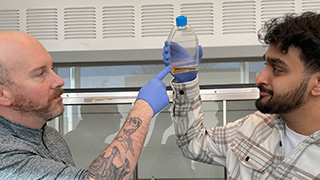
Students are encouraged to integrate their majors and/or minors with the study of archaeology where possible. Projects chosen range from studies in art, artifacts or architecture of antiquity to chemistry, computer applications and photography. Museum internships are usually available and strongly encouraged. Co-op programs for summer and year-round work also are available.