College of Arts & Sciences
Students who wish to prepare for any of the medical science professions (medicine, dentistry, osteopathy, optometry, or veterinary medicine) may do so at Seton Hall University in a variety of ways. No specific major is required to prepare for the above professions. 

Traditionally health professions students select a science major, since basic training in biology, chemistryand physics are foundations for the healing arts. More importantly, students are encouraged to select a major that reflects their interests including non-science disciplines where they can best demonstrate their academic potential. 

Regardless of the student's major at Seton Hall, the Health Professions Advising Committee assists students in the selection of appropriate courses. While there is some variation of practice, most health professional schools require the following undergraduate studies:

  • one year of biology;
  • one year of general or inorganic chemistry;
  • one year of organic chemistry
  • one year of mathematics;
  • one year of physics; and
  • one year of English

To fit these pre-requisites into the student's major and overall academic schedule, the health professions student must seek advising each semester for pre-registration of courses from the faculty advisor dedicated to each program.

Overall, an undergraduate education provides an opportunity for students to gain knowledge in the natural sciences, social sciences and the humanities, as well as acquire skills in problem solving, inquiry, intellectual discipline, time management, commitment to lifelong learning, and interpersonal relationships. Although the majority of health professional schools prefer applicants with a Bachelor of Arts (B.A.) or Bachelor of Science (B.S.) degree, occasionally an exceptional student is admitted after completion of three full years of college work.

Criteria for entrance into any of the medical profession schools are constantly changing, and chances of a student being accepted in any of the medical professions vary with the year. For example, the entering medical school class of 2008 had an average science GPA of 3.60 and an average overall GPA of 3.66. In the other professions, due to a smaller number of applicants for the positions open, an average GPA of 3.5 or better is usually necessary. There are also specific admissions tests required for entrance to most of these professional schools, and the scores on these tests are very important.  Since the number of applicants to professional schools is large, many of the medical science professional schools are now looking first at the specific admission test score as well as the cumulative and science GPA for the initial screening.
 
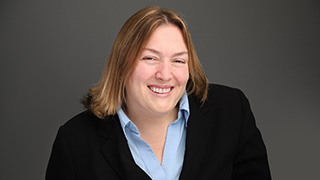
Dr. Roberta Moldow, chair of the Health Sciences Advisory Committee, helps Seton Hall students determine the most appropriate career paths based on individual academic achievements, liabilities, values and life goals. Students will be counseled to pursue realistic goals that maximize their potential. Dr. Moldow may also be consulted for the current criteria and acceptance rates.
Contact Us

Health Professions Advising Program
(973) 761-9487
Arts & Sciences Hall Rm. 203